
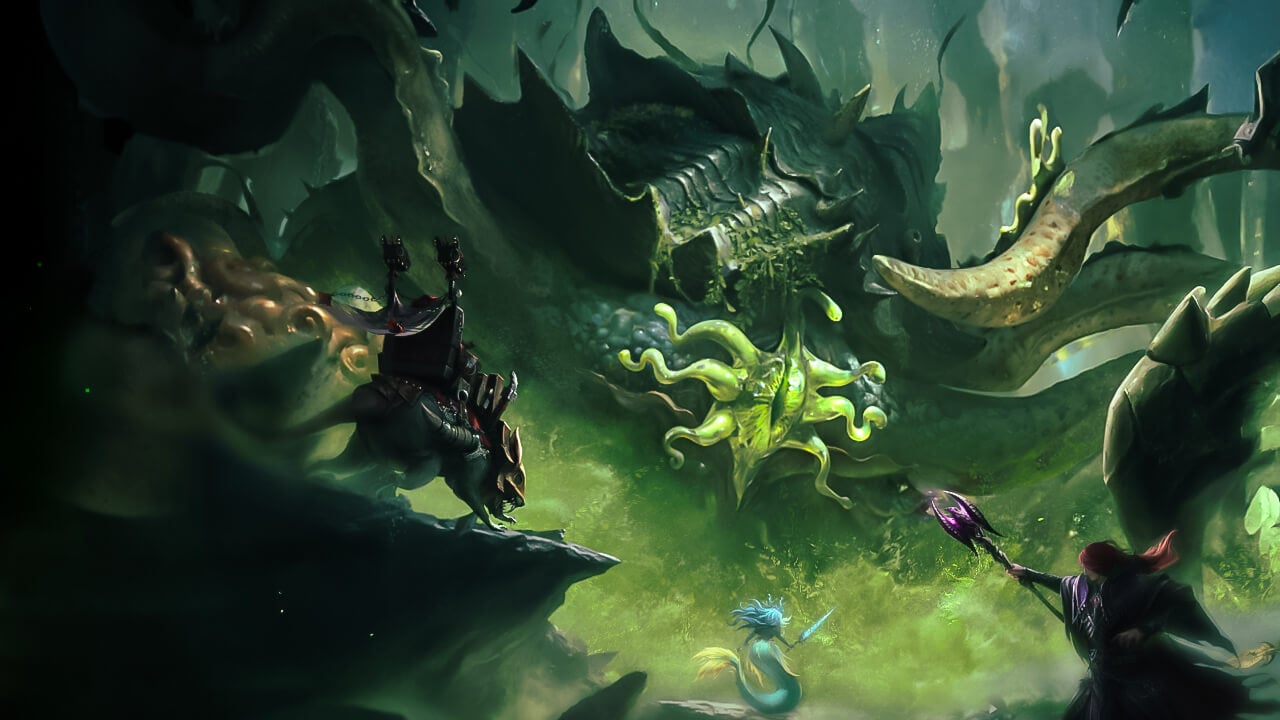

Dragonheir Abyssolossus Boss Guide
Worried about hitting a wall in the final part of Dragonheir: Silent Gods? You’re not alone. Some bosses are dsigned to test your understanding of mechanics, timing, and team synergy. This encounter is a perfect example. If your team keeps falling apart despite solid gear, the issue likely isn’t stats… it’s strategy.
In this guide, we’ll break down the boss mechanics, the key counters you need, and the best team compositions. From beginner-friendly setups to advanced endgame builds, so you can finally take control of the fight.
Boss Mechanics Overview: What You’re Really Fighting
This boss revolves around relentless debuff pressure and resistance checks. Unlike more straightforward encounters, you can’t simply out-heal or out-damage the mechanics.
The biggest threat comes from Rust Poison, a powerful debuff that cannot be removed. That single detail changes everything. Instead of reacting, you need to prevent damage through Debuff Immunity and high Resistance. If you try to play reactively, your team will slowly collapse under the pressure.
On top of that, the boss constantly tests your buff uptime and punishes poor timing. It’s a fight that rewards preparation and consistency over brute force.
Passive Skills: The Hidden Pressure

The boss’s passive abilities quietly shape the entire encounter. Unbreakable Conch reduces the effectiveness of frequent skill-based damage, meaning certain heroes lose value here. It’s not a run-killer, but it does influence who you bring.
Gaze of the Deep, however, is critical. This is where Rust Poison comes into play. Since it cannot be dispelled, your best option is to bring heroes that provide Debuff Immunity, such as Catherine or Acilia. Keeping this uptime consistent is essential, even a small gap can lead to heavy damage spikes.
Active Skills: Where Runs Are Won or Lost
The boss rotates through several abilities, each targeting a different weakness in your team.
Some, like Furious Trample, are straightforward damage abilities that can be handled with healing. Others, like Venom Spate, are far more dangerous, applying Defense Penalty and amplifying incoming damage. This is where stacking Resistance and using artifacts like Prismatic Cloak or Titan Ribs becomes incredibly valuable.
Then you have Earthquaker and Elden Deity’s Touch, both of which push your team’s ability to maintain buffs and manage debuffs. If your buffs are constantly stripped or your team is overwhelmed by debuffs, your entire setup falls apart.
And finally, there’s Howl of the Deep. This creates a short vulnerability window where you need to unleash your full burst. Timing is everything here. Hit it correctly, and you’ll see massive damage. Miss it, and you’re dragging the fight out longer than you want.
Core Strategy: Resistance, Immunity & Timing

So how do we win?
First, aim for around 400 Resistance on key heroes. This dramatically reduces the impact of the boss’s debuffs and makes the fight far more stable.
Second, prioritize Debuff Immunity over cleansing. Since the main threat cannot be removed, prevention is your strongest tool. Heroes that can consistently protect your team will always outperform reactive supports here.
Finally, focus on timing your ultimates during the boss’s vulnerability window. This is your biggest opportunity to deal damage, and syncing your skills correctly can make the difference between a clean run and a wipe.
Best Teams for Early Progression

If you’re newer to the game and still building your roster, don’t worry because there are plenty of accessible options that can handle this fight.
Teams like Isolde, Vicuc, Sabrina, Dargo, and Gragrir or Gladros, Estella, Gerthin, Bleddyn, and Nadja offer a solid balance of survivability and damage. They may not have perfect synergy, but with enough Resistance and proper timing, they can carry you through.
Similarly, compositions like Catherine, Nathaniel, Altair, Nimbus, and Vani provide strong defensive tools and access to Debuff Immunity, making them particularly effective for stabilizing runs.
Advanced Team Compositions: Stronger Synergy, Better Results
Once your roster expands, your options open up significantly.
Advanced teams such as Journ, Reytah, Sacredeia, Whisk, and Rook or Feenja, Beldelle, Fredegonda, Zhorak, and Shinnah bring stronger synergy and more reliable buff uptime. These teams are built to handle the boss mechanics rather than just survive them.
On the defensive side, lineups like Acilia, Nastjenka, Guineavire, Tharivol, and Sutha excel at maintaining Debuff Immunity and controlling incoming damage. Meanwhile, teams featuring Irmoush, Huberg, Gladys, Lorentheel, and Alton offer exceptional consistency in longer fights.
Endgame Teams: Maximizing Damage Windows

At the highest level, it’s all about optimization.
Teams like Synarell, Flora, Chorak, Caspar, and Felicity or Oggok, Talwer, Paixton, Durem, and Karf are designed to fully capitalize on the boss’s vulnerability phases. These compositions combine strong buffs, precise timing, and high burst damage to end fights quickly and efficiently.
Even some simpler setups such as Naro, Adolphus, Follie, Alfie, and Tonalnan can perform well when properly geared, showing that execution matters just as much as hero rarity.
Final Thoughts: Master the Mechanics, Win the Fight
This boss is a classic Dragonheir design. Tricky but incredibly rewarding once you figure it out. It’s not about overpowering the encounter, it’s about understanding it.
Focus on Resistance and prioritize Debuff Immunity. Time your damage to hit the burst window. Do those things well, and you’ll see immediate improvements in your runs.