

How Speed Works in RAID: Shadow Legends
Learn how Speed works in RAID: Shadow Legends. Understand turn order, Speed stats, Speed buffs, and how faster champions gain more turns in every area of the game.
What Does Speed Do in RAID?
The Basics of Speed
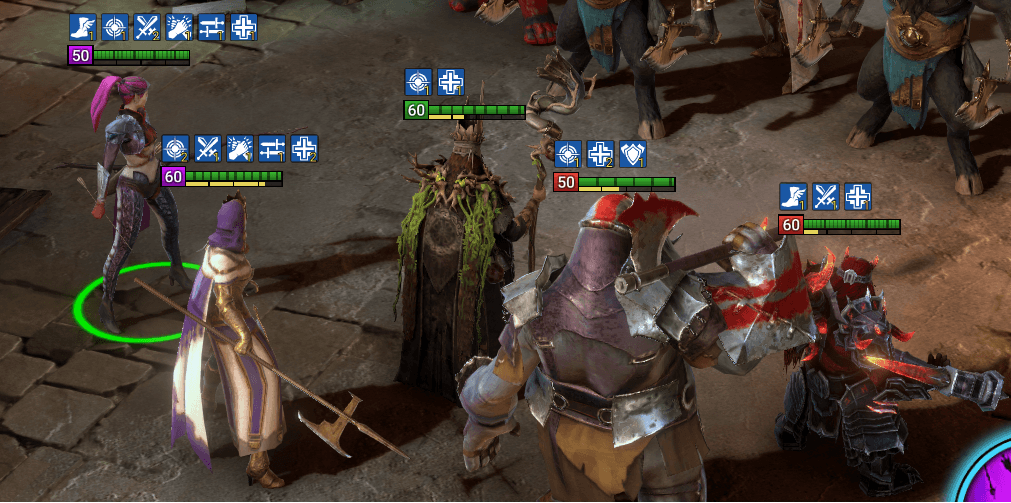
Speed determines how quickly a Champion fills their Turn Meter. Every Champion has a Turn Meter bar underneath their HP bar. As the battle progresses, that meter fills according to the Champion’s Speed stat. Once the Turn Meter reaches 100%, the Champion becomes ready to take a turn.
A Champion with higher Speed fills that meter faster than a slower Champion. This allows them to act earlier and, during longer battles, take more turns overall.
Speed affects every area of RAID, including:
- Campaign
- Dungeons
- Doom Tower
- Faction Wars
- Arena
- Clan Boss
- Hydra
- Cursed City
Whether you are trying to clear your first dungeon stage or compete in high-end Live Arena, Speed plays a major part in how reliably your team performs.
Why Speed Is So Important
More Speed usually means more turns. More turns allows better rotation of a Champion’s kit.
A faster damage dealer attacks more frequently. A faster support Champion refreshes buffs and protective effects before they expire.
Speed can provide:
- More damage
- More healing
- Make it easier to maintain buff, debuff and control uptime
- Faster cooldown cycling
- Greater survivability
Consider a support such as Siphi the Lost Bride. Her kit provides healing, cleansing, buffs, Turn Meter and a revive. Building her quickly does not improve only one part of her kit. It allows her to use all those tools more frequently.
The same principle applies to damage dealers. A Champion with enormous Critical Damage is impressive on paper, but their overall contribution can suffer if they are too slow to even get a turn.
This is why many endgame builds prioritize Speed before attempting to maximize secondary stats.
How Turn Meter and Speed Work Together
Understanding Turn Meter
Turn Meter controls when Champions take their turns. Each Champion’s meter continually fills based on their Speed. When it reaches 100%, that Champion is placed into the queue to act. When multiple Champions are ready, the game evaluates how far their Turn Meters have progressed beyond the threshold.
This is important because a Turn Meter can effectively move beyond 100%, even though the UI does not display the exact overflow. A Champion sitting farther beyond the threshold will act before another Champion who has only just reached it.
Speed determines natural Turn Meter gain, but skills can manipulate it directly. Champions can fill an ally’s Turn Meter, reduce an enemy’s meter, completely deplete it, or grant an Instant Turn.
That direct manipulation is powerful because it changes the expected turn order. For a deeper explanation of these mechanics, visit our Turn Meter Guide.
Faster Champions Take More Turns
The easiest way to understand Speed is to compare two Champions under simple conditions.
A Champion with 200 Speed gains Turn Meter approximately twice as quickly as one with 100 Speed. Over a long encounter, the faster Champion will generally take roughly twice as many natural turns, although Turn Meter effects, Extra Turns and enemy mechanics can change the exact sequence.
The difference becomes less dramatic when the Speed values are closer:
- 200 Speed versus 100 Speed: The faster Champion cycles at roughly double the rate.
- 250 Speed versus 150 Speed: The faster Champion gains a major advantage and regularly laps the slower Champion.
- 300 Speed versus 200 Speed: The 300-Speed Champion does not take two turns for every one enemy turn, but still builds a substantial advantage throughout the fight.
That advantage compounds over longer battles.
In a short Arena fight, Speed can determine who moves first and wins immediately. During Hydra or Demon Lord, it can result in dozens of extra actions across the entire run.
Those extra actions mean additional attacks and chances to trigger Warmaster, Giant Slayer, or other effects.
Speed vs Turn Meter Effects
Speed and Turn Meter manipulation are closely related, but they are not the same mechanic.
Increase Speed raises the affected Champion’s Speed stat for the duration of the buff. The stronger version increases Speed by 30%, causing Turn Meter to fill more quickly on an ongoing basis. Turn Meter Boosts immediately fill a percentage of the Turn Meter. Arbiter is a classic example of a champion with a large team Turn Meter boost.
Turn Meter Reduction removes progress from an enemy’s meter. Lyssandra is one of RAID’s best examples because she can boost allies while pushing enemies backwards. Deacon Armstrong is a more accessible champion that boosts his allies while reducing enemy Turn Meter, allowing him to create separation between both teams.
These mechanics can be stacked. A Champion might receive an Increase Speed buff, gain an immediate Turn Meter boost, and benefit from an Aura at the same time. That combination can completely control the flow of a battle.
Understanding Your Final Speed Stat
Base Speed
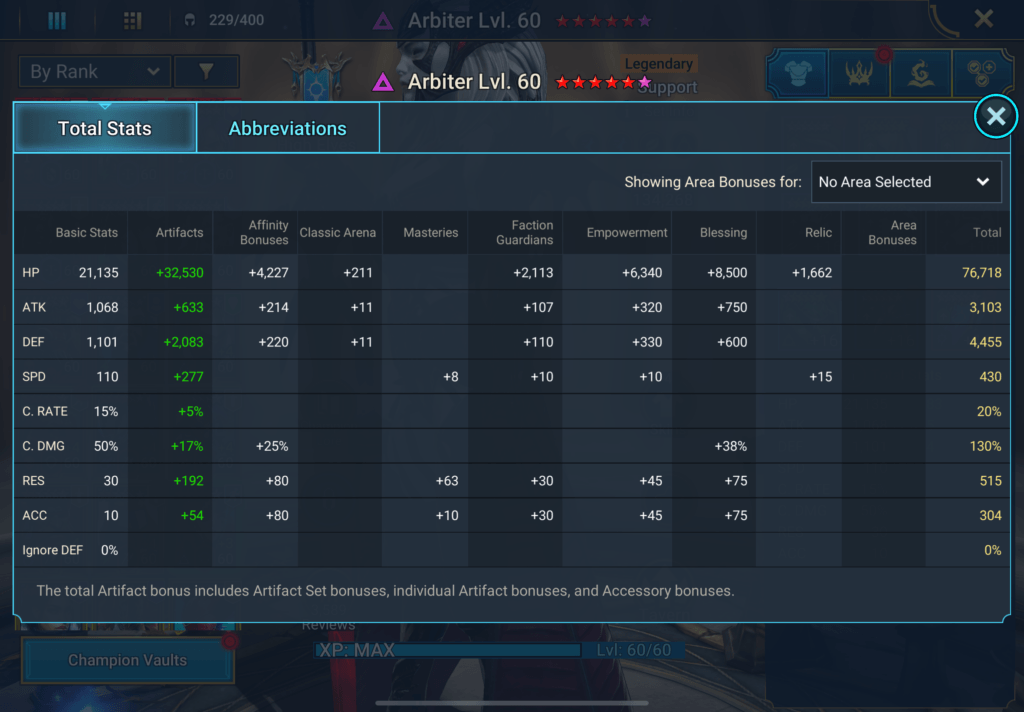
Base Speed is the Speed a Champion has before gear, Great Hall bonuses, Empowerment or any other improvements are applied.
Champions do not all begin with the same value. Some naturally have much higher Base Speed, making them easier to build as fast openers.
High Base Speed is particularly valuable because percentage-based bonuses from Speed Sets and Speed Auras use the Champion’s Base Speed. A Champion starting at 115 Speed receives more value from percentage bonuses than one starting at 95.
This is one reason Champions such as Lady Kimi and Siphi the Lost Bride are naturally suited to fast builds.
Base Speed is not everything, though. Gear quality will eventually create a much greater difference than a few points of starting Speed.
Gear and Substats
Artifacts provide most of the Speed found in a standard Champion build.
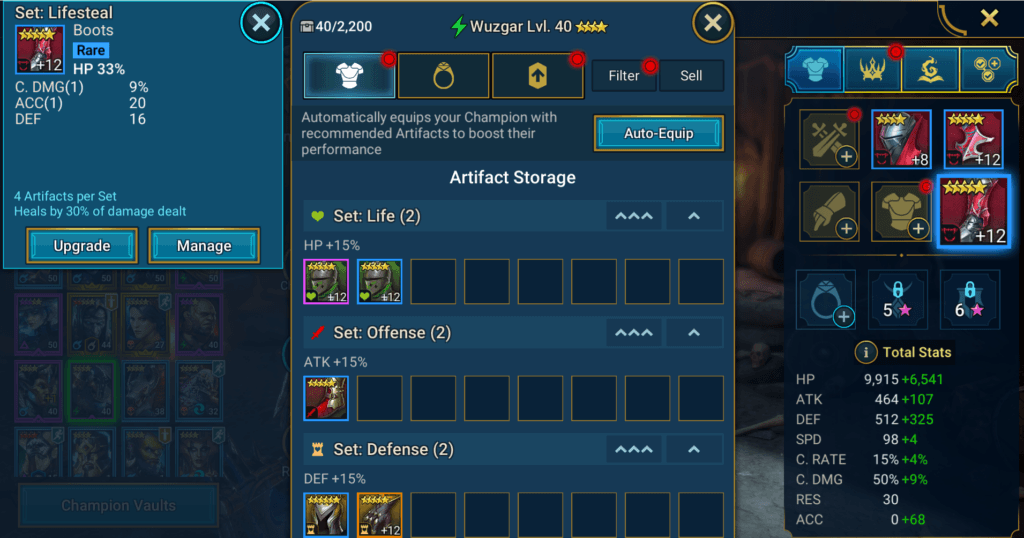
Boots are the only Artifact slot capable of rolling Speed as a primary stat. Six-star, fully upgraded Speed boots provides a massive increase, making it one of the most important early progression items on any account.
Speed can also appear as a substat on:
- Weapons
- Helmets
- Shields
- Gloves
- Chestplates
- Boots without a Speed primary stat
- Banner Accessories and relics
Each Artifact can roll into its Speed substat several times as it is upgraded. An item with one Speed roll might be useful, but an item with three or four rolls can become account-defining.
Glyphs add further Speed to eligible substats. Artifact Ascension can also provide additional Speed when the correct bonus is obtained.
No individual upgrade may look enormous on its own. However, a few points from every Artifact, followed by Glyphs and other bonuses, quickly accumulate into an extremely fast build.
Learn more about evaluating equipment in our Artifact Guide and improving substats in our Glyph Guide.
Auras and Buffs
A Speed Aura increases the Base Speed of eligible Champions in the location listed on the skill.
Some Auras work only in Arena, others work in Dungeons, Doom Tower, or Faction Wars. Others apply in all battles. Always check the wording rather than assuming every Speed Aura works everywhere.
An Aura is active from the beginning of the battle and does not need to be cast. This is why Arena leaders such as Arbiter are so important, the Aura helps the team win the initial Speed race before anyone has taken a turn.
An Increase Speed buff is different. It must be placed during battle and temporarily raises the Champion’s Speed.
Champions such as Nekmo Thaar, Eostrid Dreamsong, and Krisk the Ageless can use Increase Speed Buffs to help their teams cycle faster.
Auras, gear, buffs, and Turn Meter effects can all operate together. The Speed shown on the Champion page is therefore only the starting point for how quickly that Champion may perform in battle.
Recommended Speed Targets
Early Game Speed Targets
During early progression, just get your most used Champions what you can rather than chasing extreme numbers immediately.
Practical early targets include:
- Campaign and early Dungeons: Approximately 140–170 Speed
- Your “go first” Champions: Approximately 160–190 Speed
- Early Arena opener: As fast as your account can reasonably build, ideally 180 or higher
- Early Demon Lord: Commonly around 160–180 Speed, depending on difficulty and team setup
These are guidelines, NOT strict requirements. A functional team with sensible turn order is more important than forcing every Champion into the same range.
Speed boots should be a major priority. Placing six-star Speed boots on a Champion can immediately transform how frequently they heal, buff or control enemies.
Mid Game Speed Targets
As your account progresses, enemy Speed increases and your Champions need to cycle their skills more consistently.
Useful mid-game targets include:
- Dungeon progression: Approximately 180–220 Speed
- Doom Tower and Faction Wars supports: Approximately 200–240 Speed
- General debuffers: Approximately 200–240 Speed with sufficient Accuracy
- Hydra progression: Approximately 210–250 Speed
- Arena opener: Approximately 250–300 Speed, depending on your tier
- Demon Lord: Determined by the specific Speed Tune rather than a general benchmark
At this point, you should begin separating builds by role. Your Arena opener may need every available point of Speed, while a Demon Lord Champion might require an exact value that cannot be exceeded without breaking the team.
Endgame Speed Targets
Endgame requirements vary dramatically depending on the content, Champion, team strategy, and level of competition.
Common targets may include:
- Hydra supports: Approximately 250–320 or more
- Hard Dungeon supports and controllers: Approximately 250–300
- Cursed City builds: Often 230–300, depending on the restriction and stage
- Gold Arena openers: Frequently 300–380 or more
- High-end Live Arena openers: Potentially 400 or more
- Specialist damage dealers: Often 200–280, depending on the composition
These numbers should not be treated as mandatory thresholds. A defensive Arena team may deliberately avoid competing in the traditional Speed race. A Turn Meter booster may allow following Champions to run more slowly.
The answer to “how much Speed do I need in RAID?” is always linked to the content and job the Champion must perform.
Common Mistakes
Building Champions Too Slow
Building Champions too slow is one of the most common gearing mistakes in RAID.
A healer who moves after the team has already died cannot heal anyone. A debuffer who places decrease DEF after the damage dealer fails to improve that Champion’s opening attack. A control Champion who moves after the enemy team has already used its strongest abilities may have missed the chance to control the fight.
When a Champion appears weak, check the gear before replacing them. The problem may be the build rather than the kit.
Ignoring Speed Boots
Speed boots are among the strongest progression items in the game.
New players often equip ATK%, DEF%, or HP% boots because some quests tell you too. Or because those stats visibly increase damage or survivability. However, Speed boots usually create more value by allowing the Champion to act more frequently.
A support Champion taking four turns instead of three may give an extra heal or protective buff. That additional skill use can provide more survivability than a moderate increase to HP or DEF.
Damage-stat boots become more reasonable in specialized or advanced builds, but Speed boots should be the default for many early and mid-game Champions.
Prioritizing Damage Over Speed
A damage dealer needs stats that their abilities are based off of, but its not as black and white as this.
Imagine one Champion deals 100,000 damage per attack but acts twice. Another deals 75,000 per attack but acts three times. The slower build produces 200,000 total damage, while the faster build produces 225,000.
The quicker Champion may also cycle back to an important AoE or single-target ability sooner.
This does not mean every nuker should be built at extreme Speed. Arena damage dealers often rely on a booster to deliver their turn, while some counterattack builds intentionally run more slowly. The goal is to balance Speed with Critical Rate, Critical Damage, and the relevant damage stat.
Use our Champion Guides to check the recommended priorities for individual Champions.
Forgetting Team Turn Order
Speed is not only an individual stat. It controls how the entire team works together.
A basic Arena turn order might be:
- Turn Meter booster
- Buff remover or control Champion
- Decrease DEF debuffer
- Damage dealer
If the damage dealer moves before Decrease DEF is applied, the team loses a large amount of potential damage.
Demon Lord teams are even less forgiving. Buffs, cleanses, Ally Protection, Block Damage, and Unkillable effects may need to activate at precise points in the boss cycle. One Champion moving out of sequence can cause the run to collapse.
Before improving a Champion’s Speed, consider whether that change will disrupt the order of an existing team.
How Speed Impacts Different Champion Roles
Damage Dealers
Speed increases how often they attack and how quickly they return to their strongest abilities.
For general PvE content, damage dealers usually need enough Speed to cycle efficiently without sacrificing too much Critical Rate, Critical Damage, ATK, DEF, or HP.
Slower builds can work when the Champion is supported by Turn Meter boosts, Ally Attacks, counterattacks, or Instant Turn effects. Cardiel, for example, can generate additional attacks through his team utility without every damage dealer needing to take a natural turn.
Arena nukers may also be slower when protected by a carefully tuned team. However, leaving too large a gap between the booster and nuker can allow the enemy to interrupt.
Support Champions
Support Champions generally benefit enormously from high Speed. As these are the guys generally pushing the rest of the team forward.
Their value also comes from maintaining buffs, healing allies, removing debuffs, reviving fallen Champions or resetting cooldowns. Every additional turn creates another opportunity to provide that utility.
Champions such as Siphi, Arbiter, and Prince Kymar are regularly built quickly because their most important abilities can completely reset the direction of a fight.
Yumeko is another strong example. Cycling her cooldown manipulation more frequently can allow an entire team to reuse its strongest abilities while preventing enemies from doing the same.
Debuff Champions
Debuffers usually need both Speed and Accuracy.
Speed allows them to act before the Champions who benefit from their debuffs. Accuracy helps those effects land successfully.
A Decrease DEF Champion should generally move before the primary damage dealer. A Decrease ATK Champion should act before a boss or dangerous enemy can attack. A Block Buffs Champion in Hydra needs enough Speed to maintain the effect reliably.
Building Accuracy without sufficient Speed may create a Champion who can land every effect but rarely gets the opportunity to use it.
Control Champions
Control Champions often need to act before the enemy.
An AoE Stun, Freeze, Provoke, Sleep, Petrification, or cooldown increase can prevent an enemy team from using its most dangerous skills. When the controller is too slow, those skills may already have been used.
Lady Mikage demonstrates how Turn Meter reduction and crowd control can work together. Her alternate form can disrupt several enemies at once, helping her team retain control of the turn order.
In Arena and difficult wave content, moving first can determine whether your controller dominates the battle or spends the entire fight disabled.
Advanced Speed Concepts
Speed Tuning
Speed Tuning is the process of assigning specific Speed values so Champions act in a planned order.
This goes beyond simply making one Champion faster than another. A proper tune accounts for:
- Base Speed
- Artifact Set bonuses
- Speed Auras
- Increase Speed buffs
- Turn Meter boosts
- Extra Turns
- Cooldowns
- Boss Speed
- Masteries and passive effects
Demon Lord teams use Speed Tuning to place buffs, cleanses, and defensive effects at exact moments. Arena teams use it to prevent enemies from cutting between allied Champions. Hydra teams can use it to coordinate Provoke, Block Buffs, Increase Speed, and other key effects.
Speed Tuning is a large topic that deserves a dedicated breakdown. Visit our Speed Tuning Guides or Deadwood Jedis website before changing the Speed of Champions used in a carefully synchronized team.
Effective Speed vs Displayed Speed
Displayed Speed is the value shown on the Champion page. Effective Speed describes how quickly the Champion actually operates after all battle effects are considered.
A Champion with 250 displayed Speed may perform much faster when supported by:
- A Speed Aura
- Increase Speed
- Turn Meter boosts
- Passive Turn Meter gain
- Extra Turns
- Instant Turn effects
Set bonuses can also produce hidden decimal values. Two Champions may display the same rounded Speed while having slightly different true values, which can affect tightly tuned teams.
This is why copying only the displayed Speed from another player’s build does not always reproduce the same turn order.
Why Endgame Players Obsess Over Speed
At the highest levels, a difference of one or two Speed can decide a battle.
In Arena, that difference may determine which opener moves first. The winning opener can boost Turn Meter, remove buffs, increase cooldowns, or control the enemy team before it responds.
In Hydra, additional Speed may help a Champion refresh Provoke or Block Buffs before a Head takes its turn. However, changing Speed carelessly can also alter buff durations and move Champions out of the intended sequence.
Endgame players spend large amounts of Silver, Glyphs, Chaos Ore, and farming energy chasing small improvements because the rest of their builds may already be highly optimized.
For more advice on competitive turn order, visit our Arena Guide. For long-form boss strategies, explore the Hydra Guide and Clan Boss Guide.
Tips for Improving Your Speed
Farm Better Speed Gear
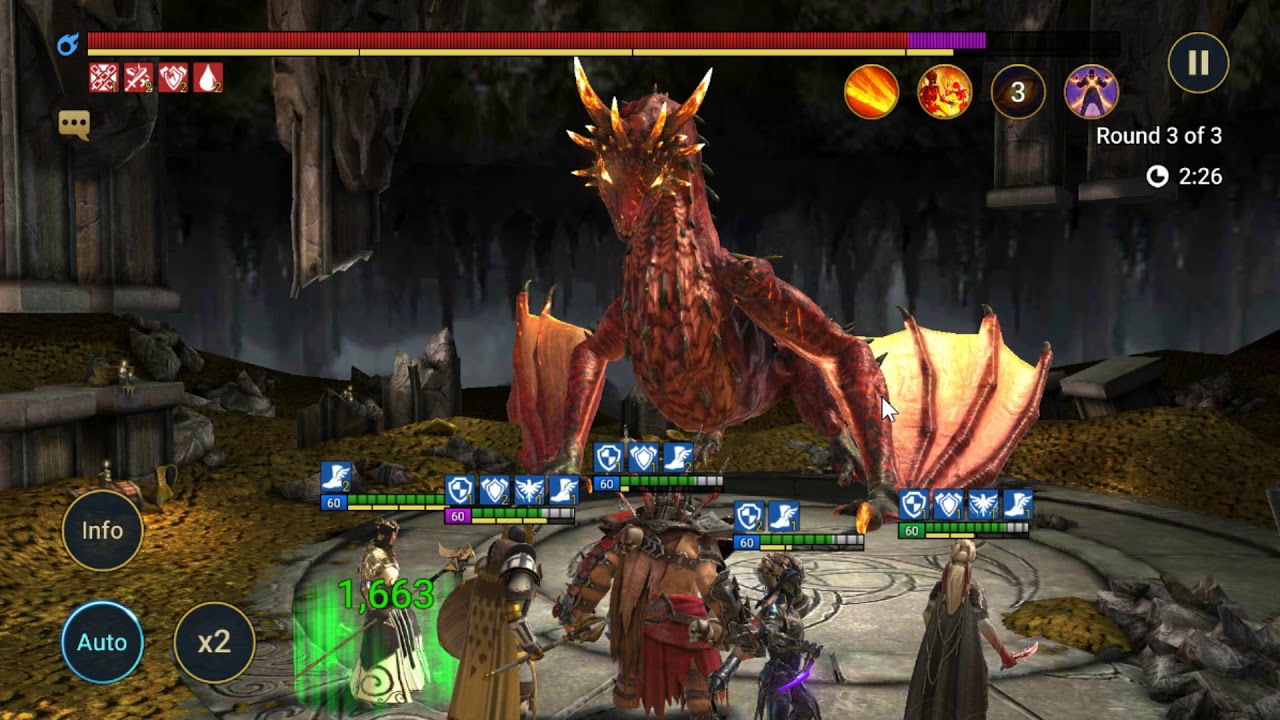
Dragon is one of the primary early-game locations for farming Speed Artifacts. The Speed Set provides a percentage increase based on the Champion’s Base Speed and remains useful from early progression into endgame.
Perception gear from the Forge is another excellent option, especially for debuffers who need both Speed and Accuracy.
Do not judge an Artifact only by its Set. A broken-set item with multiple Speed rolls may be stronger than an average item from a Speed Set. Stats should always support the Champion’s job.
Keep improving five-star and six-star items with Speed substats, upgrade them gradually, and stop investing when the rolls move into unwanted stats.
Prioritize Speed Glyphs
Speed Glyphs offer one of the most direct ways to improve an established build.
They are primarily obtained through Faction Wars, making daily progression extremely valuable. Even lower-rank Glyphs can help early builds, while high-rank Speed Glyphs should be reserved for your best equipment.
Prioritize Glyphs on:
- Arena openers
- Turn Meter boosters
- Hydra supports
- Fast debuffers
- High-quality Artifacts with several Speed rolls
Avoid using your best Glyphs on temporary equipment. Save them for pieces you expect to keep for a long time.
Upgrade Speed Boots Early
Speed boots are worth upgrading early because every additional Artifact level increases their primary stat.
Your first strong five-star or six-star Speed boots can remain useful for a long time, particularly when they also have helpful substats such as HP%, DEF%, Accuracy, Critical Rate, or Resistance.
Try to build a collection rather than moving one pair between every Champion. Supports, debuffers, controllers, and general progression damage dealers may all need Speed as their boot primary stat.
As your account develops, specialized builds will begin using HP%, DEF%, ATK%, or other boots. Until your gear can provide enough Speed through substats, however, Speed boots remain the safest and most effective option for most Champions.
Final Thoughts
Understanding how Speed works in RAID: Shadow Legends changes how you approach every Champion build.
Speed determines how quickly Turn Meter fills, which Champion acts first, and how many opportunities each member of your team receives. It improves damage, healing, control, buff and debuff uptime, and overall consistency.
Start with Speed boots, keep gear with strong Speed substats, and build teams around a deliberate turn order. As you progress, move beyond general targets and begin tailoring each Champion’s Speed to a specific role and piece of content.
Most importantly, remember that the fastest individual Champion does not always create the strongest team. The goal is to make every Champion move at the right moment.