
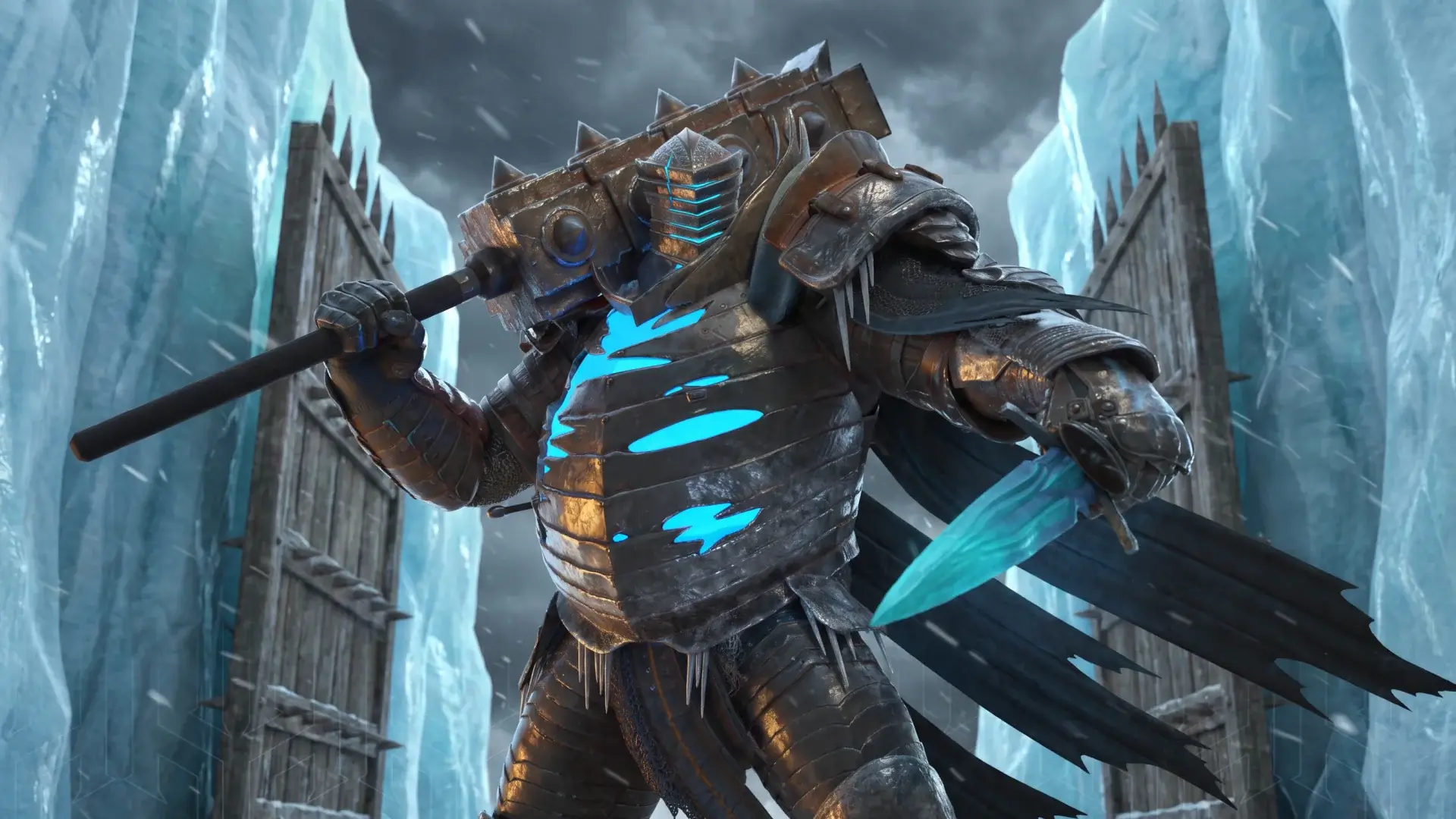

Understanding the Ice Golem’s Mechanics in Raid: Shadow Legends
In this guide, we explore how Normal Mode Ice Golem works in Raid: Shadow Legends. Learn the key mechanics behind the encounter, the best Champion types and strategies for managing his minions, how to survive the Frigid Vengeance mechanics, and how to build teams capable of consistently farming up to Stage 25.

What is the Ice Golem?
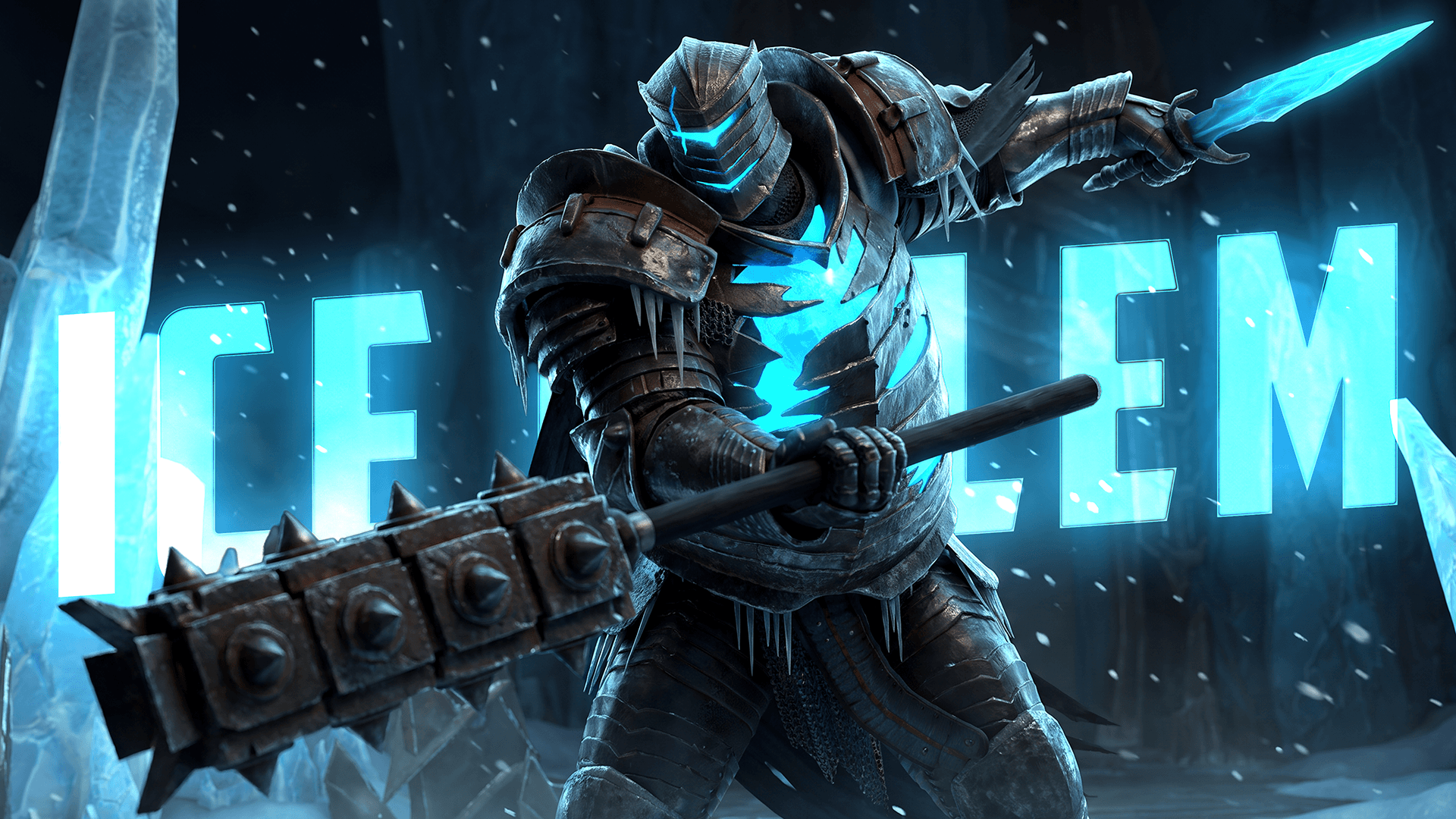
The Ice Golem is a core Dungeon encounter where Klyssus fights alongside two minions that heavily influence how dangerous the battle becomes. As his HP drops through specific thresholds, Frigid Vengeance can trigger an immediate attack against your entire team, meaning dealing too much direct damage at the wrong time can quickly turn against you.
The minions play an important role in this mechanic. Each surviving minion causes Frigid Vengeance to ignore 50% of your Champions’ DEF and increases its chance of placing Freeze by 40%. If either minion is dead when Frigid Vengeance triggers, Klyssus will also revive them to full HP. This makes controlling or defeating the minions before crossing these thresholds an important consideration, with Block Revive offering one way to permanently remove them from the encounter.
Bypassing Frigid Vengeance
Not every source of damage will trigger Frigid Vengeance. Poison and HP Burn ticks can safely push Klyssus through his HP thresholds, making damage over time effects particularly effective for wearing him down. Poison activation strategies can also bypass multiple thresholds, potentially resulting in only one, or even no Frigid Vengeance activations depending on your setup, and attacks that may follow.
For teams that struggle to avoid triggering the passive various times, strong healing, Shields, defensive support, and Revive can instead provide the protection needed to survive Frigid Vengeance and continue the fight.
Farming Ice Golem
Ice Golem is an important Dungeon throughout account progression, appearing regularly in Progress Missions, Dungeon Tournaments, and coinciding with Gear Hunters Events during Fusions and other events. You may also return here to farm several useful Artifact Sets, with Reflex, Retaliation, Cursed, and Provoke among the notable sets worth collecting as your account develops.
Understanding The Ice Golem’s Skills
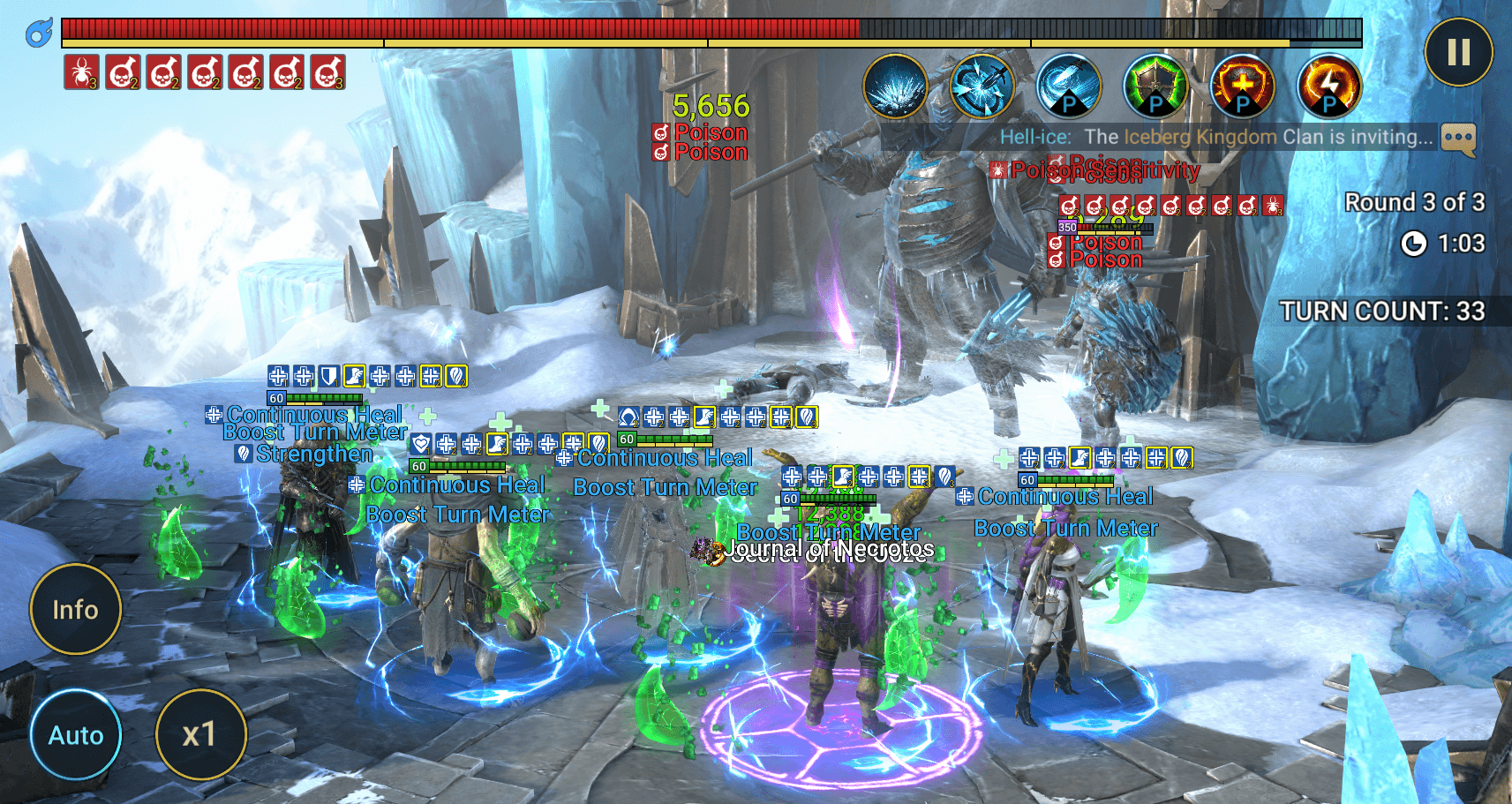
Frost Nova
Frost Nova attacks all enemies with a straightforward AoE attack. While there are no additional effects to counter, keeping your team protected with Shields, defensive buffs, healing, or other forms of sustain can help manage the incoming damage.
Numbing Chill
Numbing Chill attacks all enemies and places a 50% Decrease ACC debuff for 2 turns. This can make important debuffs such as Poison, Decrease ATK, or Decrease DEF less reliable. Block Debuffs can prevent the effect from landing, while Remove Debuffs can cleanse it before your key skills are used.
Frigid Vengeance (P)
Frigid Vengeance triggers whenever Klyssus drops below 80%, 60%, 45%, 30%, and 15% HP, immediately attacking your entire team. Each surviving minion causes the attack to ignore an additional 50% DEF and increases the chance of placing Freeze by 40%. Any dead minions are also revived to full HP when the attack triggers.
Defeating the minions before crossing these thresholds greatly reduces the danger, while Block Revive can prevent them from returning. Poison and HP Burn ticks or activations can also help push through HP thresholds without triggering Frigid Vengeance, as only direct damaging effects can trigger this passive.
Almighty Immunity (P)
Klyssus is immune to most forms of crowd control, including Stun, Freeze, Sleep, Provoke, Fear, and Block Active Skills, alongside HP exchange, HP balancing, and cooldown increasing effects. Focus instead on applicable debuffs such as Decrease ATK, Decrease DEF, Weaken, Poison, and HP Burn.
Additional Passives – Stages 21-25
From Stage 21 onwards, Klyssus gains two additional passives that reduce the effectiveness of some traditional boss damage and control strategies.
Almighty Strength (P) limits Enemy MAX HP skills to a maximum of 10% of Klyssus’s MAX HP per hit. Multi-hit Enemy MAX HP attacks can still provide strong damage, but each individual hit is restricted by the cap (Beware of constantly trigger the passive, champions like Maneater assist this strategy)
Almighty Persistence (P) reduces all Turn Meter reduction effects used against Klyssus by 50%. Turn Meter control can still provide value, but it becomes considerably less effective across the final Normal stages.
The Waves & Boss Minions
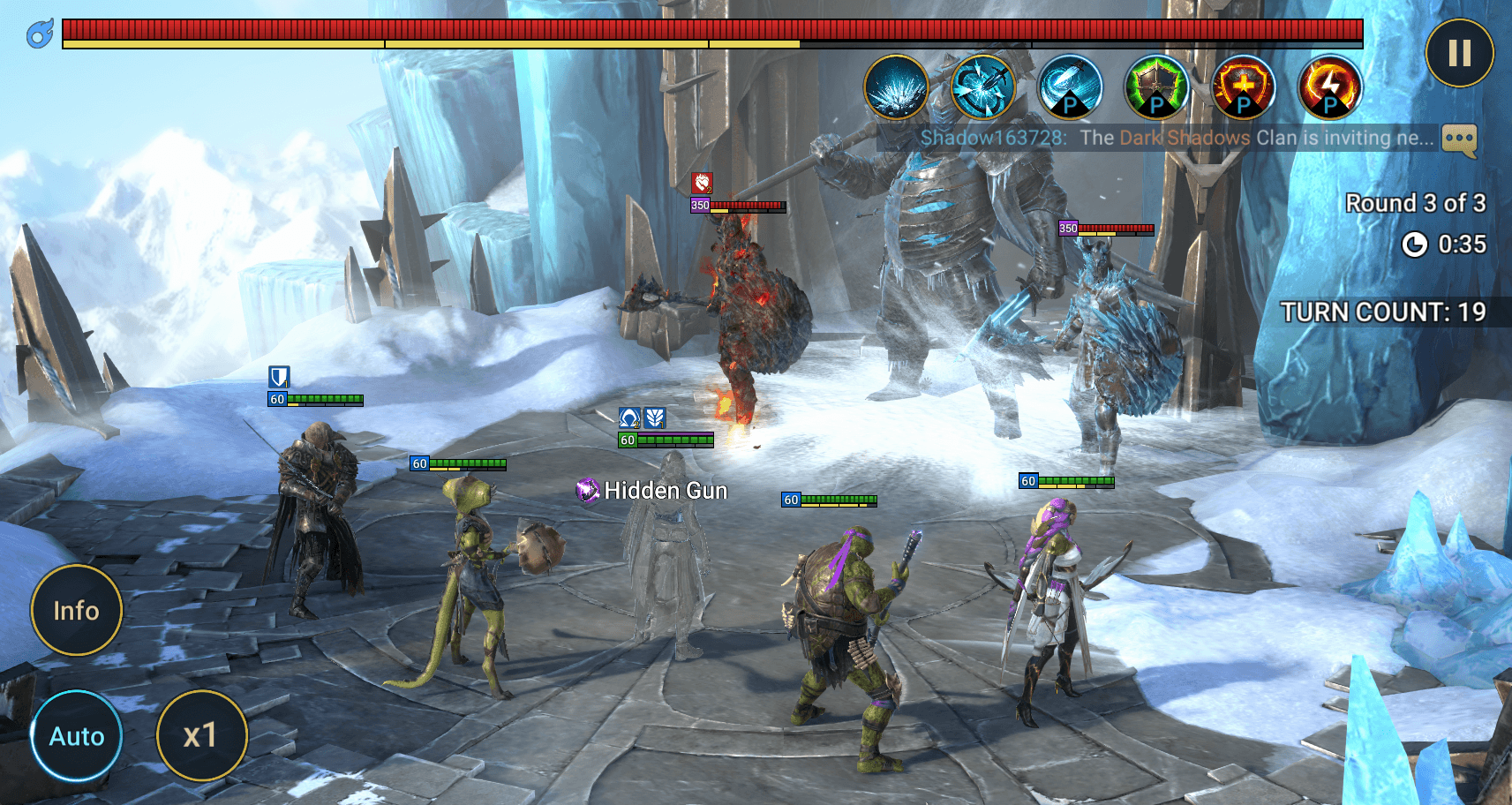
Managing the Minions
Klyssus fights alongside two minions that can place debuffs and add extra pressure throughout the encounter. More importantly, keeping them alive makes Frigid Vengeance considerably more dangerous when it triggers, increasing its DEF ignore and chance to Freeze your Champions.
Defeating the minions before pushing Klyssus through his HP thresholds can make the fight much safer. If their repeated revives are causing problems, effects such as Block Revive or Deathbrand can prevent them from returning, allowing you to remove them from the encounter and focus entirely on defeating the boss.
Clearing the Waves
Before reaching Klyssus, your team must first clear two waves of enemies. Using AI Presets and a planned turn order can help you clear these quickly while ensuring important skills are available when entering the boss fight.
Poison Explosion teams can rapidly tear through the waves while retaining useful Poison damage for Klyssus. Alternatively, Champions such as Seer can provide extremely fast wave clears, before handing the boss phase over to a durable solo Champion or the remaining members of your team.
Building An Ice Golem Team – Key Roles
Poison
Poison is one of the strongest damage options for Ice Golem, particularly when building around Poison Explosion to quickly clear the waves. Against Klyssus, stacking Poisons and using activation effects can rapidly wear down his HP and potentially push through multiple thresholds while avoiding repeated Frigid Vengeance triggers. The same damage can also help eliminate the minions.
HP Burn
HP Burn provides another reliable source of damage that can wear down Klyssus without directly triggering Frigid Vengeance. While you cannot stack multiple HP Burns for large activations like Poisons, placing and activating the debuff can contribute consistent boss damage. This strategy becomes even more relevant when progressing into Hard Mode.
Team Protection
Block Debuffs can prevent many of the incoming debuffs, while Remove Debuffs can cleanse anything that gets through. Shields, Strengthen, and Increase DEF provide additional protection against incoming attacks, with Block Damage and Unkillable offering stronger options for surviving dangerous moments. Bringing a Reviver can also recover vulnerable allies if Frigid Vengeance manages to take them down.
Decrease Skill Cooldowns
Champions capable of reducing ally skill cooldowns can help repeat your damage setup more frequently. This can accelerate Poison Explosion or other combinations through the waves, while giving you faster access to important damage, activation, protection, and recovery skills during the boss fight.
Offensive & Defensive Debuffs
Decrease DEF and Weaken can amplify your direct damage, while Decrease ATK reduces the damage Klyssus and his minions can deal. Combining these effects with Poison and HP Burn can help accelerate your clears, but be careful when relying heavily on direct damage against the boss, as crossing his HP thresholds can trigger Frigid Vengeance.
Speed & Turn Meter Manipulation
Increase SPD and Turn Meter fills help your Champions cycle through their skills faster, while Turn Meter reduction can delay enemies and create more opportunities to act. Combining both sides of Speed manipulation can help you clear the waves efficiently and maintain control during the boss encounter.
Ice Golem Normal Mode Team Example
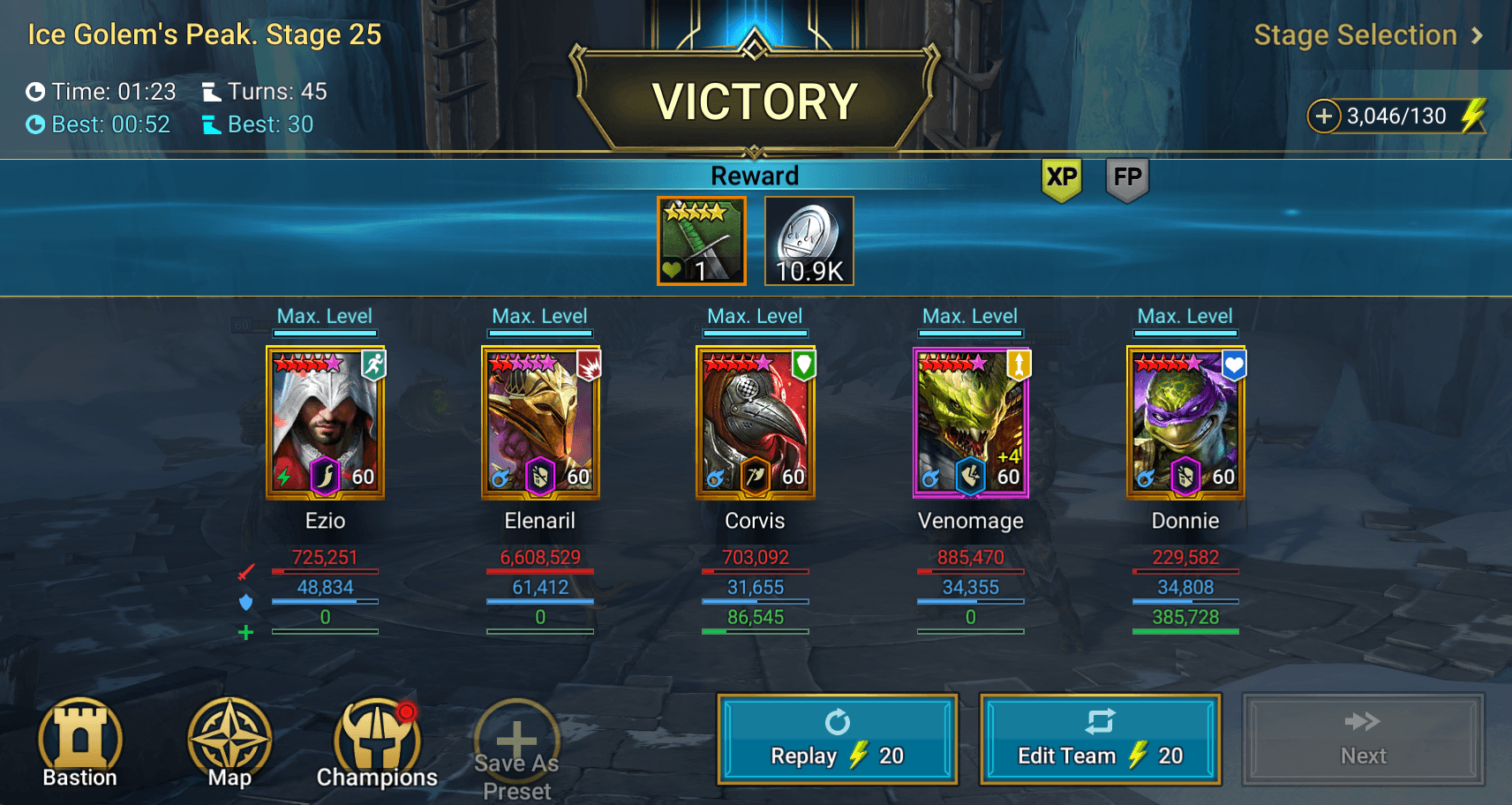
Here are five Champions that form the foundation of a fast Stage 25 Ice Golem team, built around Poison placement and activation to quickly clear the waves before melting through Klyssus and his minions. The aim is to push through multiple HP thresholds with Poison activations while minimising Frigid Vengeance triggers, creating a fast and consistent farming setup. Use these roles as a framework when adapting the team around the Champions available on your account.
Ezio

Ezio is brought into the team primarily for his A2, placing two 5% Poisons and Poison Sensitivity before instantly activating Poisons on enemies under 4 or more debuffs. He’s positioned towards the end of the turn order, allowing the team to stack enough Poisons for Ezio to activate them and instantly melt through the waves. The same setup provides huge damage against Klyssus once enough Poisons have been stacked, helping rapidly push through his HP.
Elenaril

Elenaril works hand in hand with Ezio, although she isn’t essential if you’re running a Champion capable of reducing skill cooldowns. Her main role is placing Poisons with her A2 across both waves and the boss, while her A1 provides an additional source of HP Burn. She can then instantly activate Poisons to help clear the second wave, or trigger any additional poison stacks placed after Ezio has used his activation.
Venomage

Venomage earns a place in the team by placing two 5% Poisons and Heal Reduction on all enemies, while passively reducing the damage your team receives from enemies under Heal Reduction. This provides additional protection while supplying the Poison stacks needed to clear the waves, wear down Klyssus, and set up your ally activations. Venomage also brings Decrease ATK, Decrease DEF, and additional Poison activation utility through the A1.
Donatello

Donatello is a strong example of team protection and Speed manipulation, capable of removing debuffs from allies while placing Continuous Heal and Strengthen to improve their survivability. His passive can also prevent an ally from dying to a fatal hit, providing additional security against dangerous attacks.
He also brings Increase SPD, Turn Meter fills, and the ability to decrease ally skill cooldowns by 2 turns. This cooldown reduction is particularly valuable for allowing your team to return to important Poison placement and activation skills faster for both the waves and boss.
Corvis

Corvis can be built to solo the boss, but also fits perfectly into Poison activation teams due to the number of Poisons he can provide. His A3 places two 5% Poisons, then places Poison Sensitivity and two additional Poisons on enemies already under 2 or more Poison debuffs, quickly supplying the stacks needed for ally activations.
His A2 adds further utility by increasing enemy debuff durations and ally buff durations, while his passive reduces the damage your team receives from enemies under Poison. This combination of Poison placement, team susatin, and debuff extension makes Corvis a standout option for Ice Golem.
Building Your Debuffers For Ice Golem
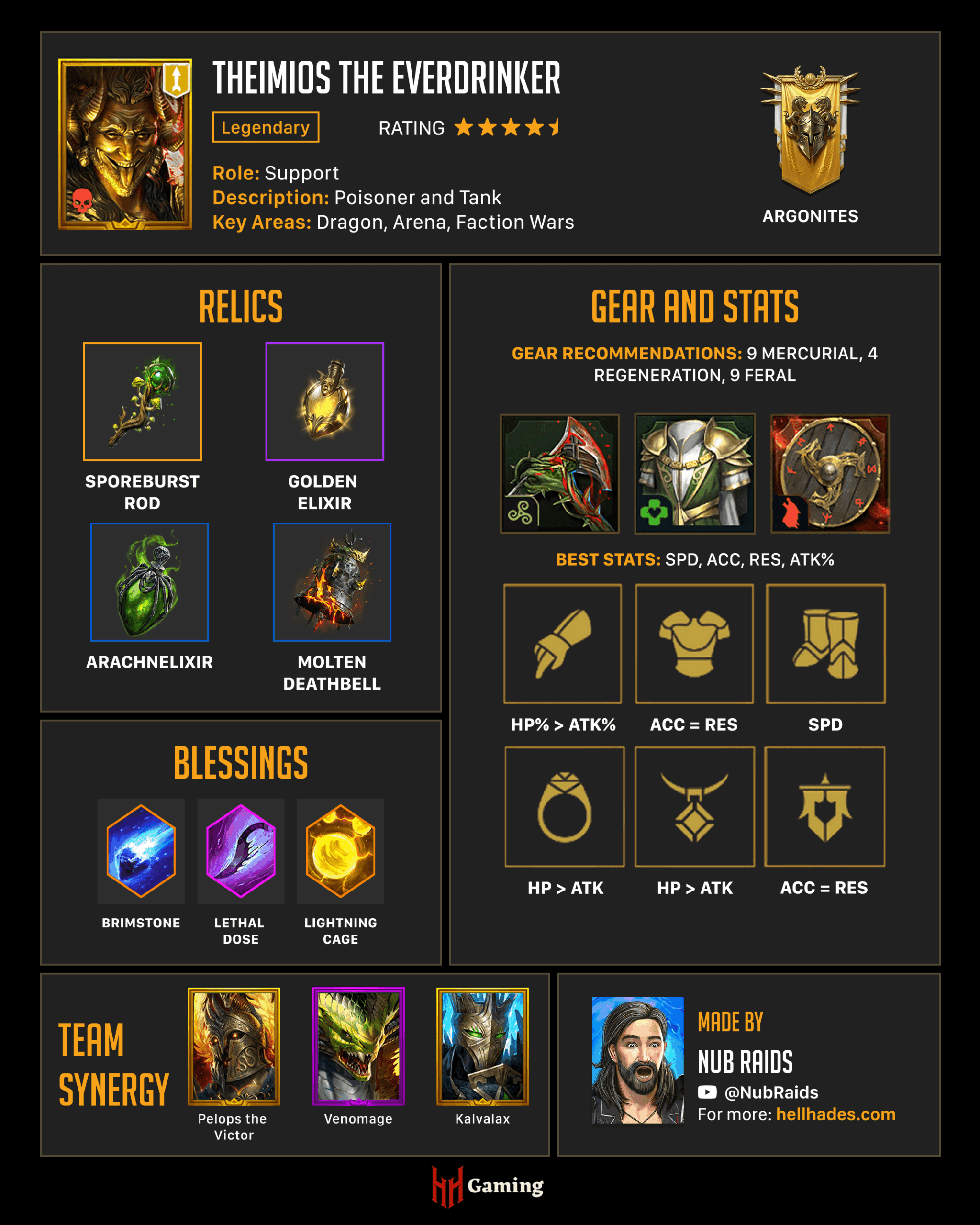
Debuffer Build Focus
For Champions responsible for placing Poison, HP Burn, Decrease ATK, Decrease DEF, or other important debuffs, prioritise reaching the required ACC. SPD is equally important for cycling back to Poison placement and activation skills, while your turn order should be planned around the combination you’re using to clear the waves and approach the boss.
Speed and Perception are excellent general Artifact Sets for reaching these requirements, with Accuracy sets providing another accessible option. Reflex and Relentless can also help Champions return to important debuff and activation skills more frequently. Use the Raid Stages Tool to check the SPD, ACC, and RES requirements for your chosen stage.
Building a Solo Champion
Another approach is to clear the waves quickly before allowing a durable Champion to handle Klyssus alone, although some Champions can be built strongly enough to solo the entire encounter. These builds generally rely on consistent Poison placement to wear down the boss safely, alongside enough self sustain to survive both Klyssus and his minions.
Regeneration is one of the strongest sets for this strategy, providing healing as the Champion cycles through their turns. Aim for high SPD to maintain the healing and Poison rotation, enough ACC to consistently land Poisons, and high RES to prevent incoming debuffs from disrupting the run. Defensive stats should then be prioritised to ensure the Champion can withstand hits without relying on external support.
Tips for building Ice Golem teams
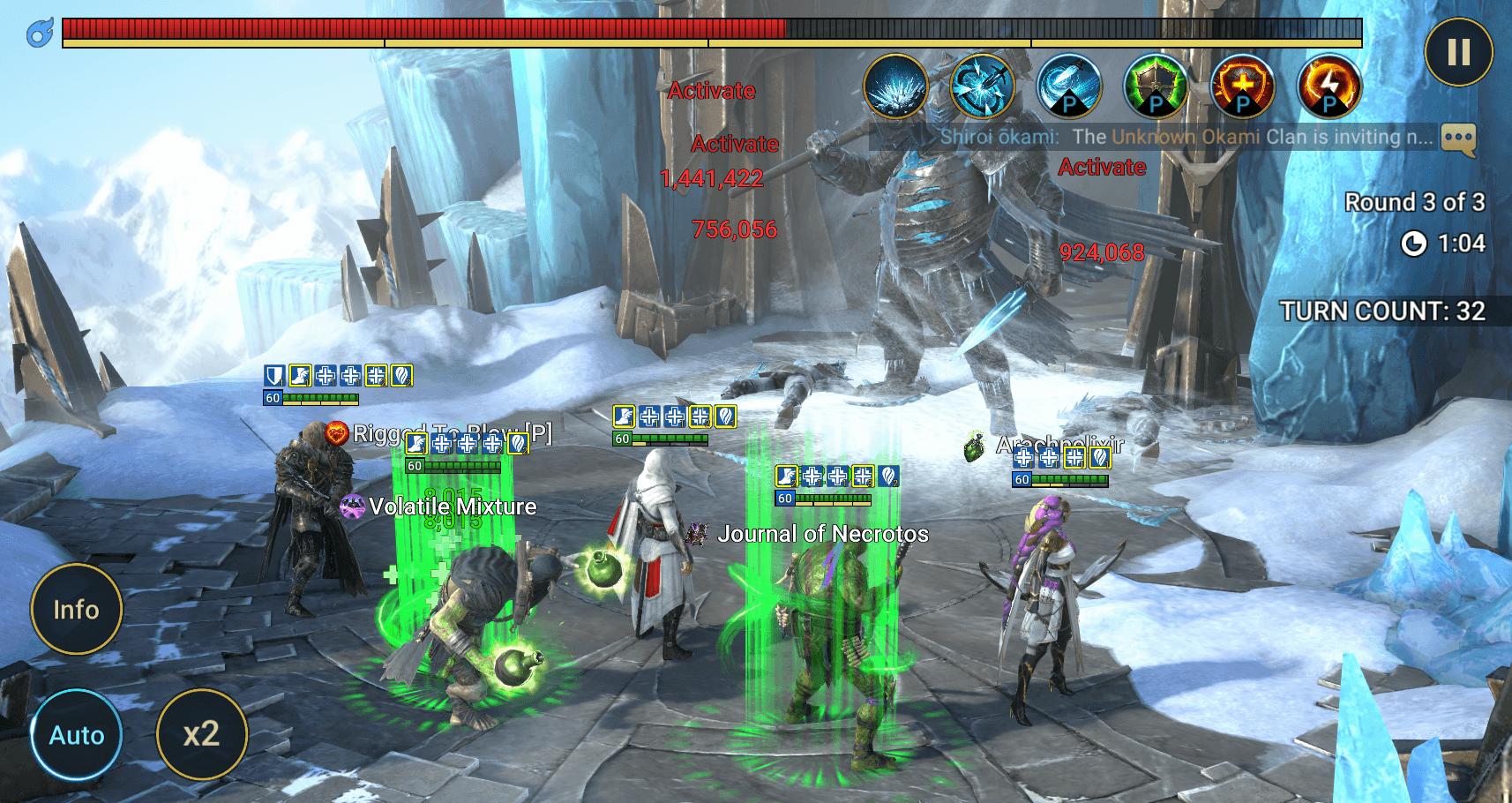
Managing Frigid Vengeance
- Watch the HP Thresholds – Direct damage that pushes Klyssus through his HP thresholds can trigger Frigid Vengeance, so consider how and when your damage is being dealt.
- Deal With the Minions – Each surviving minion increases the danger of Frigid Vengeance by adding DEF ignore and increasing its chance to Freeze your Champions. Block Revive can permanently remove these minions, allowing you to focus entirely on Klyssus. Crowd Control over them can also help.
- Use Damage Over Time Effects – Poison and HP Burn can wear down Klyssus without directly triggering Frigid Vengeance, alongside activating them for faster clears.
Maximising Poison & HP Burn
- Stack Your Poisons – Poison is one of the strongest ways to steadily wear down Klyssus while avoiding unnecessary Frigid Vengeance triggers.
- Build Around Activations – Poison activation strategies can rapidly push through large portions of the boss’s HP, potentially bypassing multiple thresholds depending on your setup. Ensure you have enough stacked before activating them.
- Consider HP Burn – HP Burn provides another reliable source of passive damage and can be paired with activation effects to accelerate the fight.
- Plan Your Direct Attacks – Be mindful of attacks following your activations, as poorly timed direct damage can still cross a threshold and trigger Frigid Vengeance.
Keeping Your Team Alive
- Block Incoming Debuffs – Block Debuffs can protect your Champions from effects such as Decrease ACC and Freeze, helping maintain your intended rotation.
- Bring Reliable Protection – Shields, Strengthen, Increase DEF, Block Damage, and Unkillable can help your team withstand dangerous attacks.
- Cleanse When Needed – Remove Debuffs provides another way to recover from disruptive effects that could otherwise slow or break your run.
- Bring a Reviver – Revive can provide valuable security if Frigid Vengeance or the waves manage to take down a vulnerable Champion.
Clearing the Waves
- Plan Your Turn Order – Use AI Presets to ensure your important wave clearing skills are used in the correct sequence and are available when required.
- Use Poison Explosion – Poison based setups can quickly tear through the waves while still bringing valuable Poison placement and activation into the boss encounter.
- Consider a Seer Setup – Seer teams can provide extremely fast wave clears before handing the boss phase over to another Champion or dedicated solo option.
- Cycle Your Skills Faster – Cooldown reduction, Increase SPD, and Turn Meter fills can help repeat your setup and reach important abilities sooner.
Building for Consistency
- Reach Your ACC Requirements – Champions responsible for Poison, HP Burn, Decrease ATK, or other key debuffs need enough ACC to reliably land them on your chosen stage.
- Use Speed Manipulation – Increase SPD and Turn Meter fills help your team cycle faster, while reducing enemies can provide additional control.
- Consider a Solo Build – High RES Regeneration builds with strong SPD, ACC, defensive stats, and consistent Poison placement can allow certain Champions to handle the boss, or even the entire encounter, alone.
- Prioritise Reliability Over Raw Damage – Faster direct damage isn’t always better against Ice Golem. A controlled setup that safely handles Frigid Vengeance will generally produce more consistent runs.