
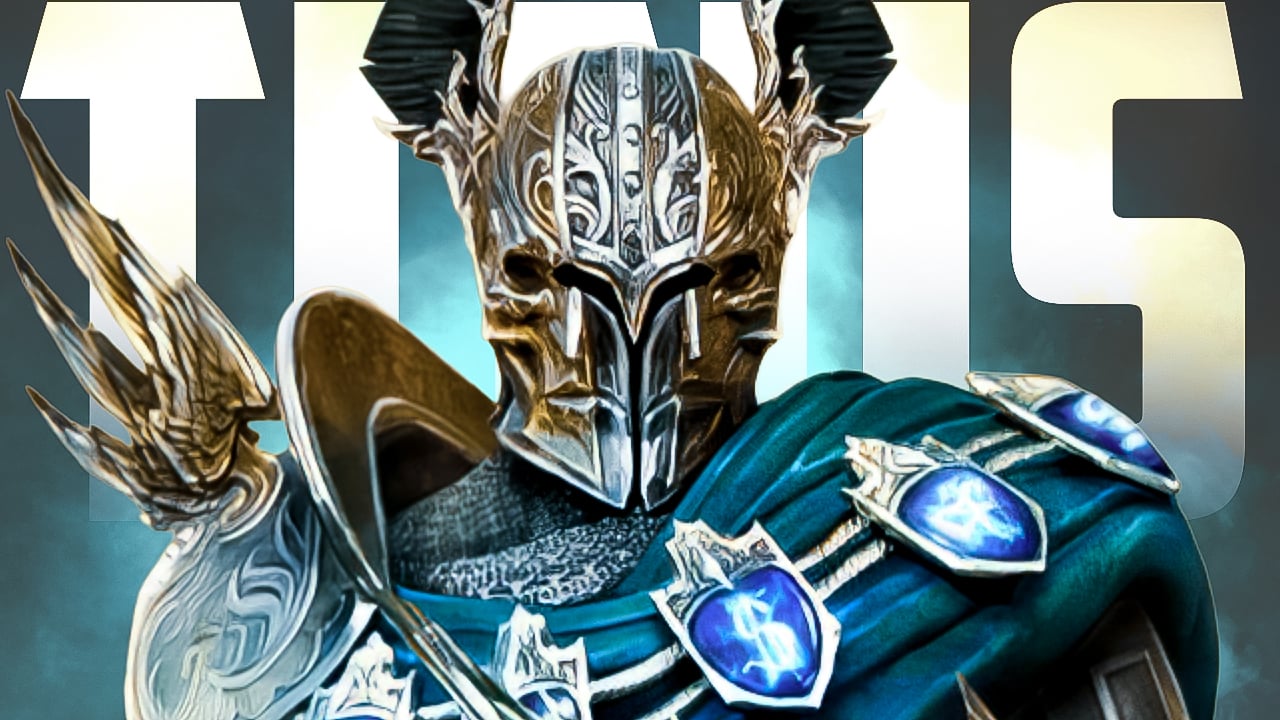

Titus Blackplume Lore: Official Story
Little remains of Androc the Glorious’ legacy. His name is all but forgotten.
That is not the case for many of his comrades and friends, the closest of whom were the Knights of the Wild – skilled warriors, counselors, and commanders who followed Androc into every battle. Their collective name was drawn from the various beasts and birds which formed the core of each’s heraldry and symbols – a bear, a wolf, an eagle, a snake, a stallion, a raven.
A raven. That was the symbol of Titus Blackplume.
n the stories that tell of Titus today, no man bar Acelin the Stalwart himself was a greater defender of the Free Cities and the land that became Kaerok. Tough. Fair. Steadfast. Loyal. Beloved. The dashing noble every courtly lady wished for herself, and every man admired, even if envy held them in its green grasp. Titus is said to have killed ten bears with his bare hands in a single fight, lifted a prize bull above his head, and swam the Valdemar Strait a dozen times without rest. He was an advocate for freedom and a bringer of incredible prosperity. Winter never came to his lands, and the rains were neither too hard nor too light.
The truth is somewhat different.
Titus was as taciturn as he was low in humor. He was not a friend to many of the Knights of the Wild. He naysayed many strategies and tactics they proposed and offered little praise for their triumphs. None could deny Titus’ loyalty to Androc, however. There were few the Glorious listened to more closely than he. His words were few, but considered and wise. It certainly helped that he clearly lacked any ambition to lead more than his seat’s own soldiery.
All Knights of the Wild agreed that among their number, no one was less corruptible than Titus. He took no ale or wine, never played dice or drew cards. Acting on the impulses of gluttony or lust disgusted him, and a withering look from his dark grey eyes stopped many a young knight from indulging in their vices. He lived an ascetic life, on campaign eating and sleeping as a common soldier would, spending his days foraging, hunting, or training with them. By candlelight he studied past wars or treatises on swordplay.
When others asked Androc about Titus, the Glorious was quite clear – the Blackplume was a simple man. He despised politics and the forces of Darkness, and cared for little more than his duty to his people and lord. He preferred life that way. Titus may have had few friends, but he drew quiet admiration and all could trust his word. If a Knight of the Wild was expected to hold ground until the right moment, when Titus would lead an ambushing force into an unsuspecting foe’s rear, they knew he would come. If it was Titus who was ordered to hold the line instead, all knew he would stand firm without complaint.
Androc the Glorious’ death wounded Titus far more than he ever revealed. Though he had never aspired to lead, others looked to him, his stoic manner giving him an image of strength that even the Knights of the Wild clung to in such a devastating moment. It pained him, but he accepted the burden.
Though the Second Great War would only rage for a matter of months after Androc fell, no one knew this. Titus drove the Knights of the Wild and their army hard, and the Blackplume held to his personal discipline more strongly than ever, desperate to control what he could after such a terrible personal loss.
Victories followed. As Demonspawn hordes dissolved into splintered bands, Titus prosecuted a counter-guerrilla war that saved countless villages from being ransacked. His forces secured roads, liberated thousands of captives seized by the Demonspawn, and wrested the Great Sanctuary of Golden Light, a magnificent chapel dedicated to Lumaya lost early in the war, from Demonspawn control. Titus also led his army in one of the final pitched clashes of the Second Great War, the Battle of Purged Field. The Blackplume took more than forty Demonspawn heads that day.
Titus spent the rest of his days battling Demonspawn holdouts and survivors, rooting out their mortal servants who remained, and destroying nests of the Undead. It was dangerous, unglorious work. But something about his implacability and his uncomplaining nature, took root in tale and song. The legend of the Blackplume was well and truly born, about the man most likely to shake his head at such a thing.