
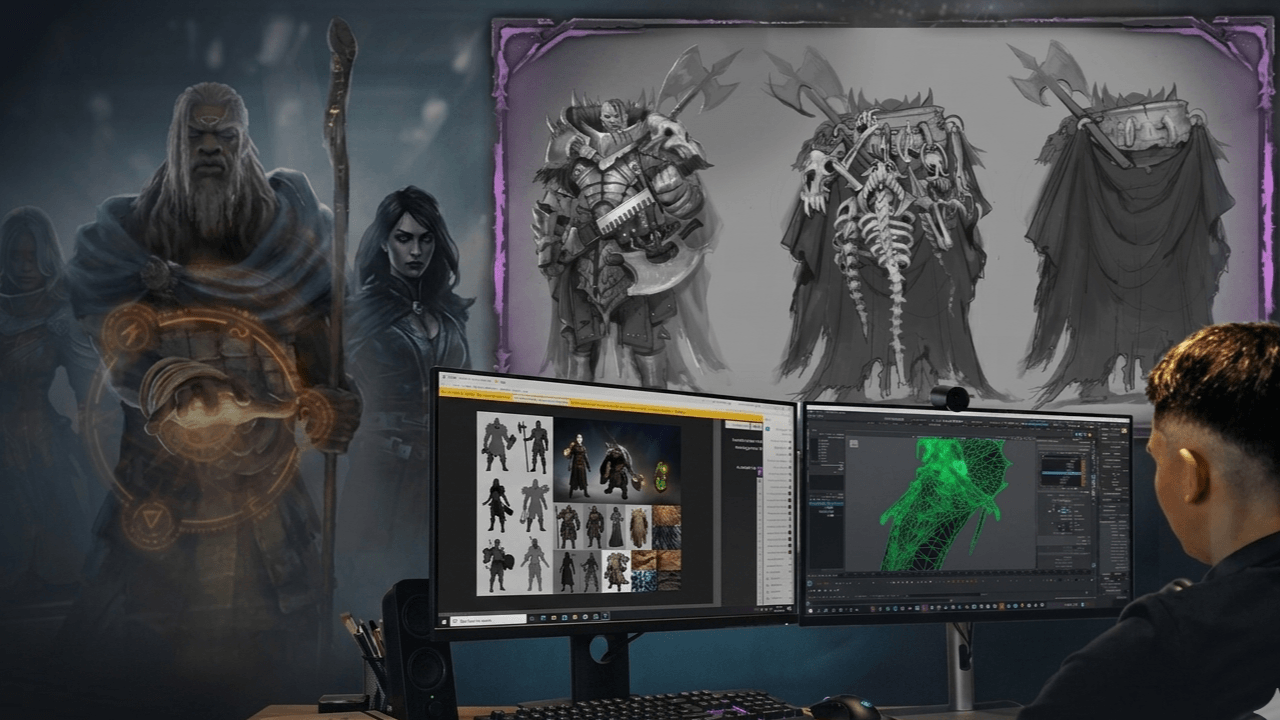
How Void Hunters Characters Come to Life
Void Hunters continues to reveal more about its development process, and the latest behind-the-scenes showcase focused on one of the game’s most important elements: character creation. From early ideas to final combat animations, the Artifex Mundi team broke down how each hero is designed, modeled, animated, and brought into the game world.
The process starts long before a character reaches combat. According to the design team, every hero begins with faction worldbuilding and role planning. The developers first establish where the character fits into the game universe, then define their combat role, personality traits, and visual identity.
One example shown during the presentation was Bohdan. His core concept centered around being a lone wolf fighter who travels and survives alone. That idea directly influenced his visual design, leading the team to equip him with multiple weapons and gear pieces that reflect constant preparation for danger.
From Concept Sketch to Final Design

Once the team agrees on a core theme, artists begin experimenting with visual directions through quick sketches. These early drafts help narrow down the strongest ideas before moving into a polished concept piece.
The developers explained that their final concept art is not designed like a traditional turnaround sheet with front and back poses. Instead, the goal is to create a single image that captures the character’s personality, movement style, and overall feeling inside the game.
Extra supporting artwork is then created later if the animation or modeling teams need more detail. One example mentioned was Sir Bernard, whose cape contains a painted portrait that required additional design references.
Building the 3D Character

After concept approval, the character art team begins 3D production. The first major stage is called the “blockout,” where artists focus heavily on silhouette and proportions. This stage helps match the in-game model closely to the original concept art.
The next phase creates the high-poly sculpt, where fine details are added to armor, clothing, weapons, and facial features. Once complete, the team moves into technical optimization through retopology and UV mapping. This step prepares the character for proper animation performance inside the game engine.
The developers highlighted how important clean topology is for animation quality. Poor mesh structure can create major movement problems later in production.
After optimization, the team transfers detailed sculpt information onto the game-ready model through a baking process. Texturing then adds colors, materials, and surface detail to complete the visual appearance of the character.
Animation Brings the Character to Life

Once the model is complete, the animation team takes over. Their first job is rigging, which creates the digital skeleton and movement controls animators use to pose and animate the character.
Void Hunters places heavy demands on this system because every hero uses different weapons, body shapes, and combat styles. The developers explained that flexibility is critical since the game focuses on fast and dynamic combat encounters.
The animation team also described hero view animations as one of the most rewarding stages of production. This is where movement, personality, attitude, and combat style finally merge together into a complete character presentation.
Effects and Combat Polish

The VFX team then adds spell effects, fire, energy visuals, and combat polish. The developers explained that they aim for effects that feel believable while still maintaining strong readability during combat.
One example shown was Codename Solo (Bohdan) and his fire effects. The team uses systematic animation tools to simulate more natural fire behavior while still keeping development efficient for a smaller studio team.
The studio also noted that they are currently balancing two major goals during development: improving overall game stability while continuing to add new systems and character-specific features.
Final Testing Before Release
efore a character ships to players, the developers perform full checks in both hero view and live combat. The final review focuses on one core question: does the character create the exact feeling and impression originally intended during the design phase?
The showcase closed with teasers for future developer breakdowns, including deeper dives into gameplay systems and the Hunt Mode, which the team described as a core part of Void Hunters.