
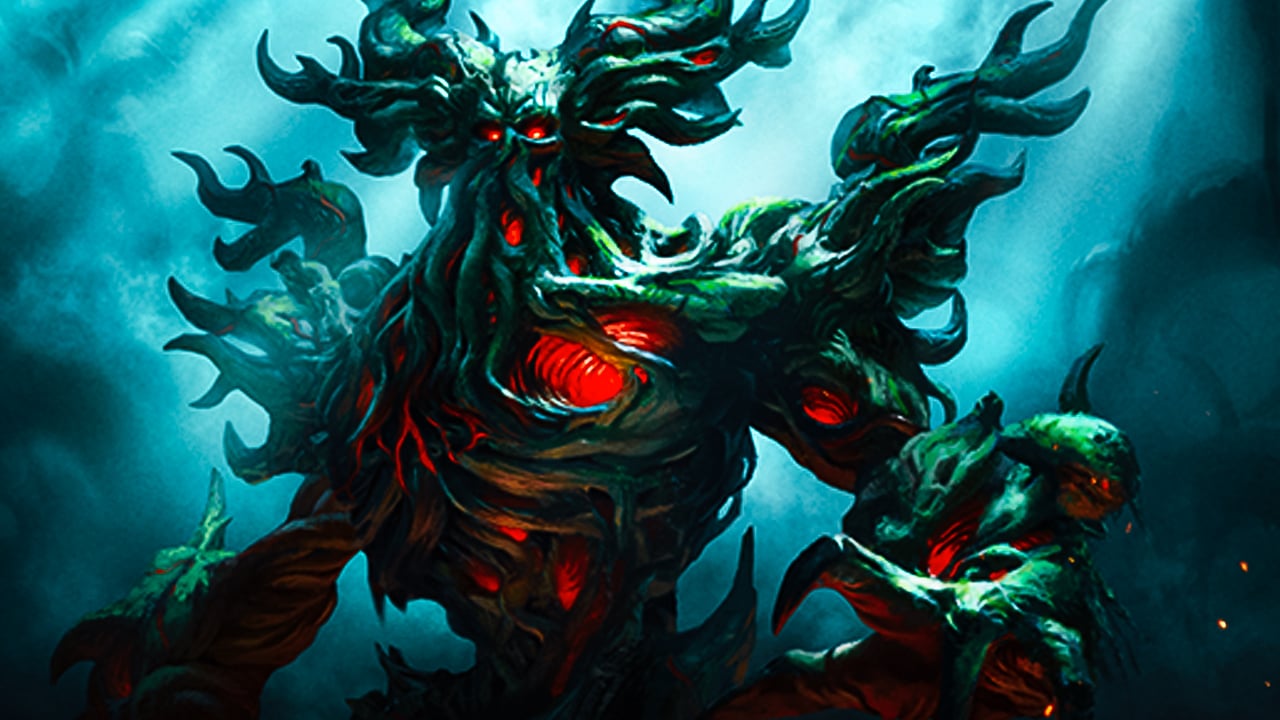

Exploring RAID’s Grim Forest – First Impressions
Grim Forest is shaping up to be one of the biggest, most involved PvE modes RAID has ever released. On the surface, it looks like “Cursed City in a spooky forest”, but once you dive in, you realise it’s a lot more about exploration, long-term planning, and boss-specific tech than just brute force nuking.
This first-look overview walks through how the mode actually plays, how the map and systems fit together, and what you should expect from your first few days in The Gloom Lands.
Building Your Team Decks – The Foundation of Your Run
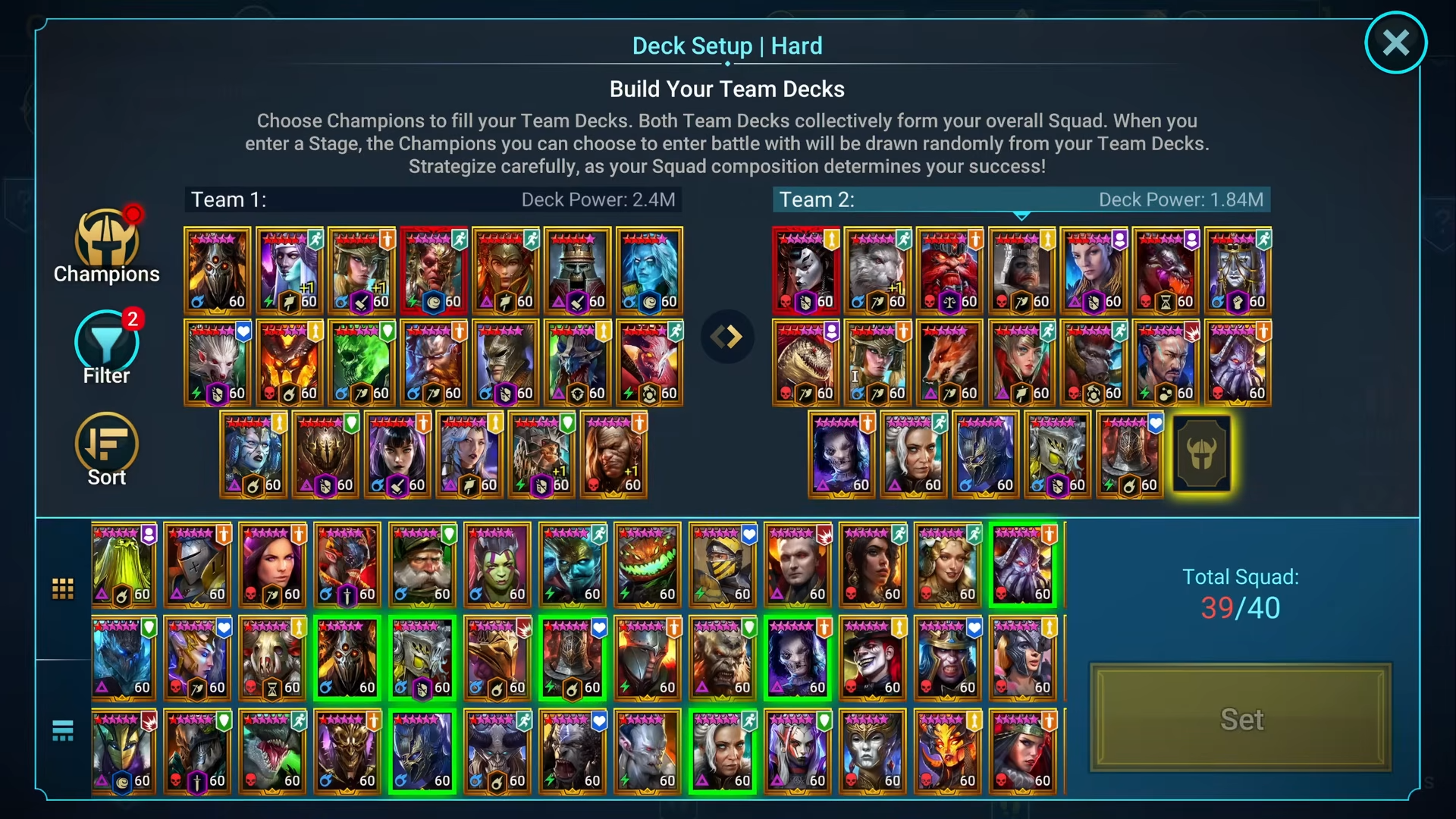
Before you ever set foot in the Forest, you have to build your decks – and this decision will echo through the entire rotation.
On Hard difficulty, you build two separate Team Decks of 20 champions each (40 total). Every battle will randomly draw a subset of champions from the relevant deck, and you build your squad for that fight from those options. Because of this:
- You want both decks to be well-rounded rather than hyper-specialised.
- You need enough damage dealers, healers, cleansers, and debuffers spread between both sides.
- You must plan for specific mechanics: for example, heal reduction for Mimic, heavy sustain for the Treasure Goblin, and strong single-target damage for many bosses.
Changing your decks mid-rotation is possible via the Squad Reshuffle vendor, but it’s awkward and limited. Many champions “lock” themselves by being used in drafted stages, so they cannot easily be swapped out. In practice, you really want your core roster mostly correct from day one, because fixing mistakes later feels clunky and may cost you valuable currency.
The Map: Fog, Regions, and the Hidden Purple Zone

When you start a rotation, the Grim Forest map is almost entirely covered in fog. You see your starting camp and a small cluster of nearby nodes – and that’s it. As you clear stages, the fog retracts around them, gradually revealing paths, chests, altars, ambushes, and bosses.
The Forest is divided into colour-coded regions that roughly indicate difficulty:
- Green zones – Easy
- Yellow zones – Medium
- Red zones – Hard
- Purple zone – “Extra Hard” secret region
In green areas, your draft draws 10 champions from each deck (plus possible bonus draws from altars). Yellow stages drop to 8, and red stages to just 5, which makes your champion pool feel much tighter and punishes sloppy deck building.
There’s also a mysterious dark purple region with a handful of battles that appears to be locked behind extra conditions. It doesn’t connect via the obvious paths, so reaching it will likely involve hidden routes or late-game objectives like crowns or major boss kills.
The key point: don’t treat Grim Forest as a straight line. If you get stuck in one direction – for example, at a nasty red boss – you can and should loop back, push into another area, and keep farming power while you hunt for altars, curios, crowns, and more manageable fights.
Trait Cards, Levels, and Curios – Huge Power Bonuses

Every stage you clear grants progression towards Grim Forest “levels”. Each level lets you pick a trait card: flat stat bonuses like attack, defence, speed, resistance, and accuracy. Over time, these stack into a huge pile of extra stats and are a big reason why early green zones can feel trivial later on.
These trait cards reset every rotation, but within a month, they give you a meaningful sense of long-term growth. The more you play, the more powerful your whole roster becomes inside Grim Forest.
Curios sit alongside this system as special items slotted into your run for extra effects. Early impressions are that they’re helpful but not nearly as impactful as trait cards. Examples include:
- Additional Grim Coins from battles and chests.
- Periodic enemy max HP damage after a certain number of ally turns.
- Random stuns, small stat reductions on enemies, or occasional buffs on allies.
They’re nice to have, but they don’t define your strategy the way the stat cards do. Think of them as small bonuses that make the grind more rewarding rather than game-changing power spikes.
Encounters: Waves, Ambushes, Mini-Bosses, and True Bosses

Not all fights in Grim Forest are created equal.
Basic wave stages and ambushes, especially in green and yellow regions, are surprisingly easy – even on Hard. With a reasonably built roster, you’ll absolutely obliterate many of these fights, which is intentional: they’re there to give you reasons to spend daily energy, earn rewards, gain trait levels, and explore more of the map.
Things ramp up when you run into:
- Mini-boss stages where a regular champion is upgraded into a boss with huge HP, immunities to crowd control and cooldown control, and enhanced passives.
- Named bosses that act as the main roadblocks of each rotation.
Some upgraded champions are far nastier than you’d expect. A good example is Frolni the Mechanist: his reflect damage and self-heal become much scarier when he has boss-level HP and immunity to control. Others like Riho Bonespear can become infuriating cleansers thanks to their massive health pools and guaranteed uptime on skills.
These fights are still beatable for strong accounts, but they’re a clear step up from the wave content, and weaker rosters might struggle if they don’t bring the correct tools.
The Repeat Bosses: Mimic and Treasure Goblin
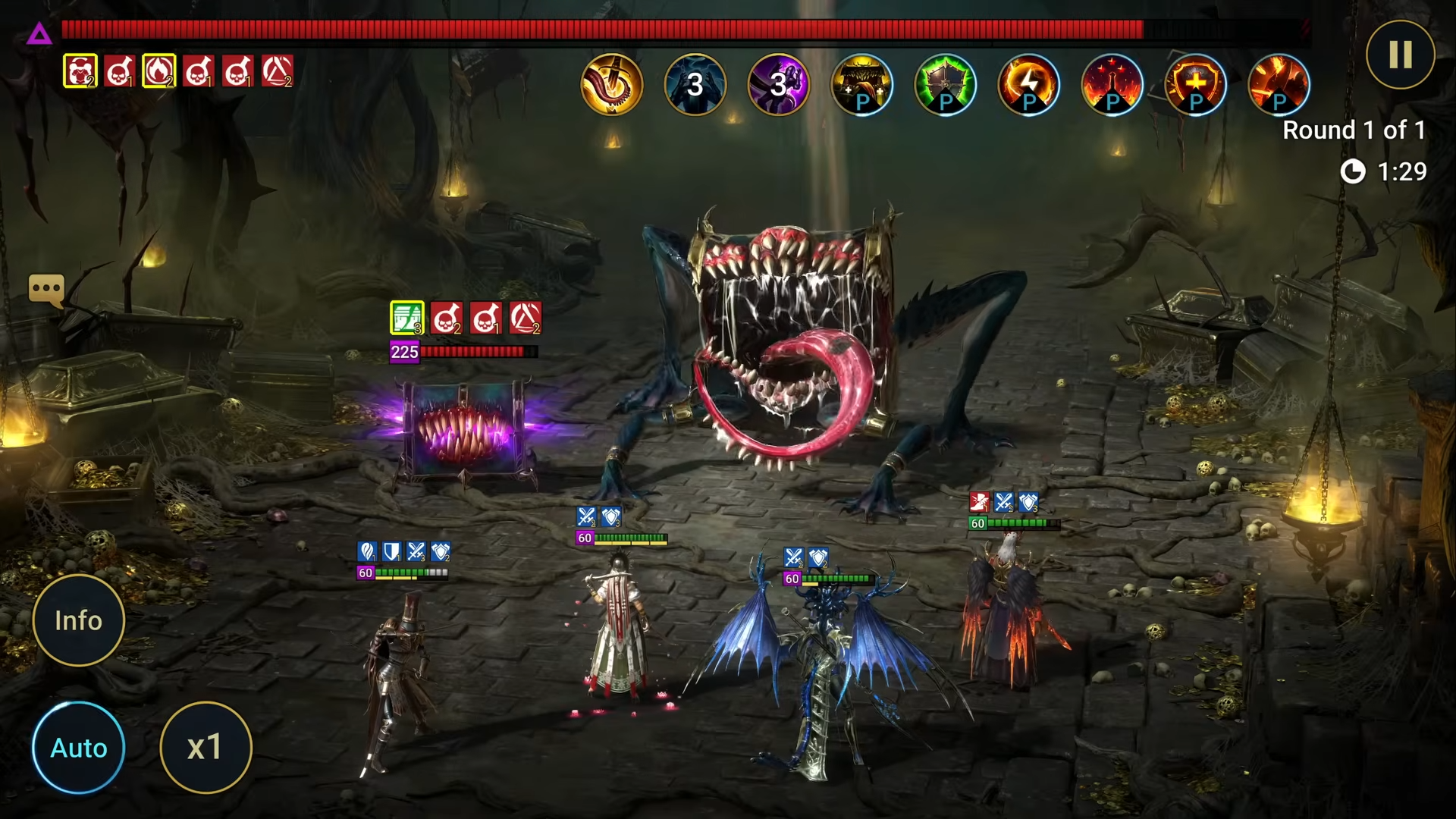
Two bosses are designed to be fought multiple times across the map, at different affinities and difficulties: Mimic and the Treasure Goblin. You’ll see them a lot, so planning for them in your decks is extremely important.
Mimic is a single-target DPS race with a nasty twist. He periodically summons a mini-mimic that “eats” your highest crit damage champion, removing them from the fight until you can kill the mini-mimic. While it’s alive, every Mimic turn heals the main boss by 25% of his max HP.
The intended clean answer is simple: bring heal reduction on the main boss. With heal reduction up, you can pretty much ignore the mini-mimic and just focus the big one down. No heal reduction, and the fight becomes a slog where he constantly undoes your progress.
The Treasure Goblin works differently. His direct skills aren’t that impressive, but he is layered in gold plates. When you break a plate, you deal real damage to him – but you also trigger huge AoE damage back on your team. At high difficulties, this backlash is brutal and can delete your squad if you’re not ready.
For him, the checklist is all about sustain. You need a lot of healing, potentially revivers, and a team that can comfortably survive repeated big hits as you smash through plates. Defensive buffs and attack down are much less important than raw sustain, because his “real” damage is tied to the plate mechanic rather than his standard abilities.
The Big Bosses and the Final Showdown

Beyond the repeat bosses, Grim Forest features four unique major bosses that appear once each on the map, plus a final boss locked behind three crowns. Each major boss has a fixed affinity, level 350 stats, and its own gimmick – from easy “first-try clears” like the vampiric lady to extremely tanky, sustain-heavy nightmares.
Defeating a major boss removes them from the final boss fight. Leaving them alive means they’ll join the final encounter, making it significantly more dangerous. Realistically, your plan for a rotation should be:
- Explore, farm easy areas, and stack trait cards.
- Find and defeat all four major bosses.
- Unlock three crowns from specific high-end encounters.
- Only then push into the final boss when your power is high enough.
The good news: attempting bosses doesn’t consume energy. If you go in, get wrecked, and back out, you’ve lost nothing but time. That encourages experimentation – you can test different teams, learn mechanics, and then go back to farming waves and exploring while you refine your approach.
Daily Play, Resources, and Rewards

Each day, you get a fixed amount of Distorted Energy to spend exploring the Forest. Most nodes cost 1 energy and might contain:
- Wave battles
- Ambushes
- Altars (extra redraws or other bonuses)
- Chests (gear, curios, Grim Coins, Grim Gold, or progression items)
- Dead ends with nothing at all
Because some paths are effectively empty, it’s smart to prioritise “big” nodes – bosses, chests, altars, and clearly branching routes – and leave low-value loops or dead ends until later (or skip them entirely if you’re short on time).
Two currencies feed into the rewards systems:
- Grim Coins – mostly spent on curios and minor upgrades.
- Grim Gold – used for vendor chests, with high-end options like Mercurial gear chests being prime targets.
On top of this, there’s a “treasure hunt” chest that accumulates charms as you complete major objectives. Opening it at the end of a rotation can grant champion fragments, souls, avatar frames, and other cosmetics or progression items, similar to Cursed City.
Early Verdict: Massive, Fun, but Slightly Uneven
Grim Forest feels huge. The map is dense, the fog-of-war exploration is satisfying, and there are plenty of bosses to learn and puzzle out. Day to day, you’ll be using your energy to push deeper, power up through trait cards, and chip away at key encounters.
The main early concern is balance. Many normal stages are extremely easy, even on Hard, while certain bosses – especially the Treasure Goblin at high levels – can feel wildly punishing in comparison. If Plarium smooths that curve and makes deck reshuffling a bit less painful, Grim Forest has the potential to be one of RAID’s best long-term PvE modes.
For now, your best preparation is simple: build strong, flexible decks; prioritise heal reduction and sustain for the repeat bosses; and treat exploration as part of the game, not a chore. If you do that, the Gloom Lands will feel more like an adventure than a brick wall.
Fun but a little tedious
Does the grim gold and coins reset with the grim forest, or can you let them build up?